
Mother & Baby Homes In Ireland

Access to
information

Infant
Mortality

Unpaid
Labour

Abuse

Breach of
Constitutional
Rights

Redress
Introduction
The plight of unmarried mothers and their children in past decades has increasingly become a matter of public concern across Ireland. The discovery of mass, undocumented graves in Tuam, Co Galway led to the Mother & Baby Homes Commission of Investigation being set up in 2015 and culminated with a final report published on 12 January, 2021.
Whilst the report has faced criticism from some quarters owing to its length (3,000 pages), legalistic tone and various limitations and oversights, it has still raised a number of important issues for those who were a resident or born into one of these institutions.
As we all await the publication of the Government’s approach to a possible Redress scheme, we have created this section on our website in an attempt to highlight some of the important issues and to share new information as it arises.
Having acted in over 500 cases during the Residential Institutions Redress Scheme and Magdalen Laundries Scheme, we understand the complex issues at hand and the suffering, often in silence, that residents have endured over many years. We also know that many victims will have a number of questions they want answers to and to understand the various options available to them.

Mother & Baby Home Commission
The Commission’s Report
At its core the Commission chose to focus on two of the most important issues raised by former residents of the homes under investigation:
- The lack of information & tracing systems; and
- Redress for the suffering caused.
Whilst many of the findings are not a surprise it is still shocking to acknowledge the level and extent of the experiences of the mothers and their children who lived in the homes under investigation. This included:

Living Conditions

Infant Mortality

Abuse

Unpaid Work

Adoption
Redress Scheme
The Commission has suggested that the recent Redress Schemes provided by the Residential Institutions Redress Scheme (RIRS) and the Magdalen Laundries Scheme as possible schemes which could be followed by Government in a redress scheme for residents of the Mother & Baby Homes under investigation.
The RIRS could be used to provide financial compensation to those who were children in the homes along with a small number of ‘young’ mothers (under 18) who would have been resident and gave birth within the homes. The Magdalen scheme would be more suited to the Mothers themselves and could be administered along the same lines with a General Payment and a Work Payment dependent upon the length of residence in the home.
Quite controversially, the Commission has deemed that owing to the introduction of the Unmarried Mother’s Allowance in 1973 that residents in homes after this point should not be eligible for redress.
Other Options
It is also fair to say that even though the Government is due to publish their approach to the Redress scheme in April, the wheels of Government can move quite slowly. This has most probably been compounded by the current Covid Pandemic. As such many commentators do not expect to see a fully operational Redress Scheme up and running for a number of years.
The option of issuing legal proceedings via the High Court therefore remains an option for victims and is a possible route which some may consider pursuing. Embarking upon this course of action, however, is not without its expense and a number of difficulties. For example, the Statute of Limitations would initially bar any attempt by a victim of the Mother & Baby Home scandal to pursue litigation.
Under normal circumstances proceedings must be brought within two years of the birth of a child and in the case of the children themselves within two years of their 18th Birthday. This is obviously not possible under these circumstances so the first step a victim will have to take is to prove in Court that negligence contributed to their ‘medically verified’ psychiatric disability.
It is true that the High Court has become more strict in this area in recent years, however, International law - in particular a United Nations 2005 declaration - could see the Government amending the legislation in respect of Mother & Baby Home cases.
Why Us?
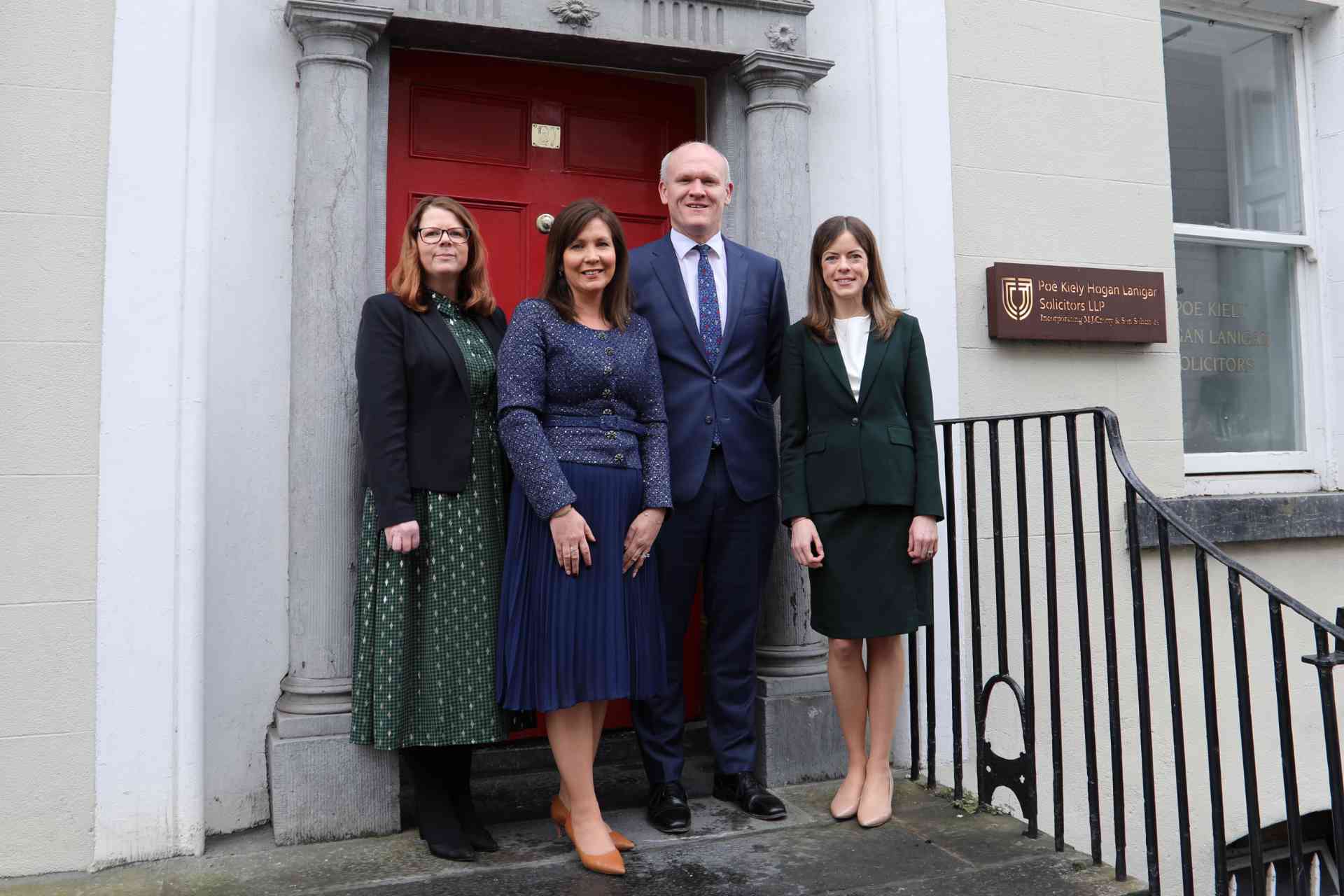
It is also important to note that whilst we are based in Kilkenny we do not only cover the South East of Ireland. Just like our renowned Surrogacy & Fertility law group, the team involved with Mother & Baby Home claims work across the length and breadth of Ireland. If you would like to have a confidential conversation with one of our team, please fill in your details below and we will contact you to arrange a time that suits you best to set up a no cost, no obligation consultation via Zoom.
Meet the Team


Why Do You Need A Solicitor?
No matter the Government’s approach to redress for residents of mother and baby homes, it is important that a victim understands what is required of them in order to meet any criteria set by the Government.
It is also important that a victim seeks independent legal advice before accepting the terms of any settlement so that they understand all of the options available to them fully before accepting an award.
What Might Happen Next?
Once the scheme has been published there may be an opportunity provided for consultation on the approach set out by the Government after which a Judge will be appointed to oversee the Redress Scheme.
Whilst it is not expected that a victim will have to prove that their legal rights have been breached, it is anticipated that the victim will be required to present their case on how they believe their rights were taken away from them and how they suffered a personal injury as a result. This could be in the form of psychological injury such as Post Traumatic Stress Disorder (PTSD), Depression, Anxiety or a personality disorder.



We're Here To Help!

A Patient's Guide To Medical Negligence In Ireland
If you think you (or someone close to you) have suffered an injury due to medical negligence, please download our free guide to understand more about the options available to you.