The International Protection System:
Process
The Process
Applications for International Protection are made to the IPO.
A single application is made and the following process is followed:
A single application is made and the following process is followed:
IPO application
- Application is made, and preliminary interview and questionnaire is conducted on the same day.
- The international protection application is made at the border on arrival, or at the IPO.
- The questionnaire is in English, and interpreters and cultural mediators are to be available to support applicants.
- The preliminary interview and questionnaire seek to identify the applicant’s identity, country of origin, route travelled to Ireland, and reasons for applying for protection.
- Fingerprints and photos of the applicant are taken at the IPO.
- Dependant children who are in the State are included in their parent’s application.
- The applicant should be told that they are entitled to apply for legal assistance.
- Most applicants will apply for legal assistance (state funded) to the Legal Aid Board..
- Some applicants will seek private legal assistance elsewhere (not state funded) – this is outside the Legal Aid process. (This assistance can be sought at any stage in the applicant’s international protection application journey, and we are often instructed in this way at Appeal stage).
- The applicant will then be called for a detailed interview (“section 35” interview)
- An appointment letter will be sent to the applicant.
- The applicant’s legal representative can attend.
- The interview is detailed and can last for a number of hours.
- An interpreter may be arranged if required.
- This interview gives the applicant an opportunity to fully explain the reasons they are seeking protection.
- There is a possibility of a call-back interview.
- First, the IPO will assess whether a person is entitled to refugee status.
- If the IPO decides that the applicant does not qualify for refugee status, the IPO will consider if the applicant qualifies for subsidiary protection.
- The IPO will issue a recommendation; to grant refugee status, subsidiary protection, leave to remain, or none of the above, enclosing a detailed consideration of the applicant’s claim (this is known as a “section 39” report).
IPAT appeal
- The applicant can appeal a refusal to the International Protection Appeals Tribunal (IPAT).
- The appeal form must be submitted to the IPAT within strict time limits:
- Standard appeal: 15 working days
- Accelerated appeal: 10 working days
- The IPAT may decide to hold an oral hearing (this is often held remotely) or may decide the matter on the written submissions/paper documentation only.
- If there is an oral hearing, a legal representative should attend on your behalf.
- The IPAT will assess whether the person is entitled to refugee status first, and if the IPAT refuses the refugee claim, the IPAT will consider if the applicant qualifies for subsidiary protection.
- If the IPAT refuses to grant refugee status or subsidiary protection, a negative decision will issue, and the applicant will be given a chance to submit “Leave to Remain” submissions to the IPO.
Leave To Remain Application
- If submissions for “Leave to Remain” are issued, they will be assesed by the IPO.
- If refused, the application’s file will be sent to the Repatriation Unit of the Department of Justice and ultimately a “proposal to deport” the applicant will most likely issue.

International Protection System

We're Here To Help!
Get in touch and book an appointment to discuss the legal options available to you.
Learn More

A Patient's Guide To Medical Negligence In Ireland
If you think you (or someone close to you) have suffered an injury due to medical negligence, please download our free guide to understand more about the options available to you.
Learn More
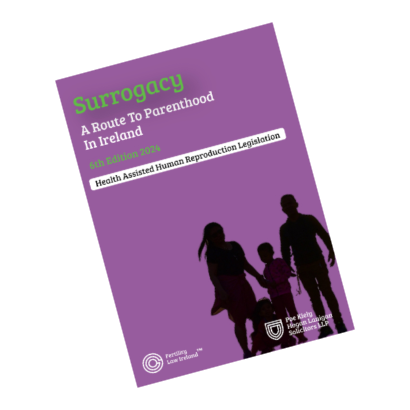
To assist couples interested in exploring Surrogacy we have prepared a useful guide
Surrogacy: A Route To Parenthood In Ireland
This guide is now in its sixth edition and is free to read online or download by clicking on the link below.